One of things I love about my job is the opportunities I get to engage in quality PD with my peers. The last 3 summers I have been lucky enough to attend the ISTE conference and this years ISTE in Philly is just as great as the last two I attended. Here is my David Letterman style top 10 list of take aways from ISTE...so far...
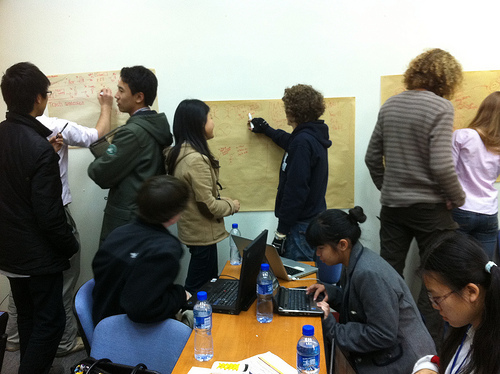
 10. HackED 15 The all day conference as part of the EduBlogger Con event. It was a full day Ed Camp style presentation facilitated by some big hitters like Adam Bellow (@AdamBellow), Angela Maiers (@AngelaMaiers) and more. The smackdown portion of the day showcased those of us in the audience who shared our 3 minutes of genius smackdown style. Click here to see the link of topics covered this day or click here to see the list of smackdown showcases
 9. #SatChat This event featured your typical twitter chat, but was held in a meeting hall and then streamed on Periscope. It was awesome to hear the voices of those tweeting and speaking in a panel type discussion. My takeaway from this was, it is all about connections. Not just connections in the digital sense, but connections with people. I believe a CORE VALUE of our school ought to be RELATIONSHIPS. It was powerful to see the multiple layers of conversation that take place during a twitter chat and see the authentic interpersonal relationship building that was taking place. One of my goals for #TYIW is going to be to bring this to our school and community.
8. There is no 'Arrived'- Feeling like a rock star one minute with your grasp of technology and educational practice and turning around to seeing those around you and realizing your are but a grain of sand on beach. The diversity of the professionals who attend ISTE is a key ingredient to what makes this experience so great. It humbles you, it inspires, and motivates you make connections and 'Be More Awesome'
 7. The Expo - About the time you are thinking you know what is out in the world for tools/sites/apps/providers/etc a walk through the expansive expo will blow your mind and prove you don't know jack about the who or what is out there for EdTech and education in general. There is tons of swag to be had (and for us cheepos a great place to pick up a toy to take back home for our kids). It is also a nice place for a change of pace of learning when visiting vendors like the Google Booth. Google and many other exhibitors are conducting learning sessions on the use of these educational tools, pedagogy, or have show and tell sessions from teachers.
 6. Social Media as instant PD - The idea of using social media, such as twitter, for professional development is not new. My PD at ISTE via social media can only be summed up as: PD on steroids, hyped on caffeine, all while experiencing a sugar high. At ISTE it is easy to immerse yourself in the 'social media thingy' and expand your PLN. My twitter feed was blowing up and Tweetdeck made it simply to follow a focused stream or my general stream. It was a constant barrage of links, articles, blogs and tidbits of PD. I honestly feel like I grew as much through my social media reading as I did in actual sessions while at ISTE.
 5. Quips & Witticisms Piggybacking on the social media is the overwhelming number of quips and sayings you see in the form of meme's and cool pics. These are great graphics that have been doctored to inspire and make you wonder and THINK. And better yet, it happens in your social media feeds without you needing to do anything. These small tidbits of info and thoughts are great little mental pinups to keep you centered for the other 361 days of the year when not at ISTE.
 3. Ignite Sessions This fast paced inspiring session gave 15 presenters only 5 minutes each and 20 slides to share their message and inspire the audience. Some of these were presented by average Joe's who wanted to share their genius but the most remarkable one was without a doubt the BE THE CHANGE message shared by Pernille Ripp (@PernilleRipp). Her energy, passion, conviction and message sent chills up spines and tears streaming down cheeks. I couldn't help but wonder why couldn't we bring and IGNITE style session back to Cozad to kick off our school with our teachers sharing their 5 minutes of genius. Click here to watch the video of the ignite sessions. Pernille Ripp was the 2nd one and is about 5 minutes into it and it is worth the watch.
 2. 'Fanboy'itis' Having the opportunity to rub elbows with some of the most respected educational leaders in the world today. Adam Bellow, Angela Maiers, Pernille Ripp, and Chris Lehman are just a few of the 'Rock Stars' I had the chance to meet, talk with and most importantly listen to!
 1. The opportunity to recharge my batteries and be grounded once again in my pursuit to change the world one student at a time. Cozad is lucky to have such great educators and I wouldn't trade the world for the time I spent collaborating, laughing, dreaming, and sharing with those who attended ISTE. Thanks to Cozad Schools for believing in my professional development and caring enough about me as an educator to help me get better at making a difference.